This week (4–10 May 2026) marks Dying Matters Awareness Week, a national campaign led by Hospice UK, encouraging us all to have one of life’s most important—yet often avoided—conversations: death, dying, and bereavement.
News & Clients Say
Viewing post categorized under: News
May 8 /
News, Wills, Probate & Lifetime Planning Blogs
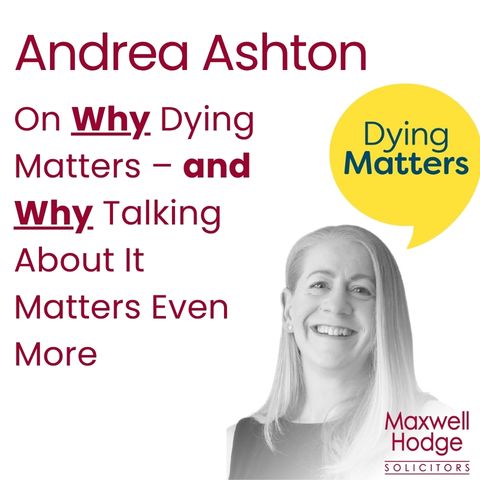
Why Dying Matters – and Why Talking About It Matters Even More

Landlords are you prepared and up to date?
Some private landlords may be aware of the new changes that have come into force following the passing of the Renters Rights Act. However, some may not.

March 3 /
Community, News
Maxwell Hodge Solicitors reinforces their dedication to supporting local causes by donating £1,800 to ‘Aid to All’ Charity
Dan Eales, Manager at Huyton branch of Maxwell Hodge recently visited ‘Aid To All’, a registered charity based in Huyton, to present a donation of £1,800.00. The donation will make a significant impact on the local community.
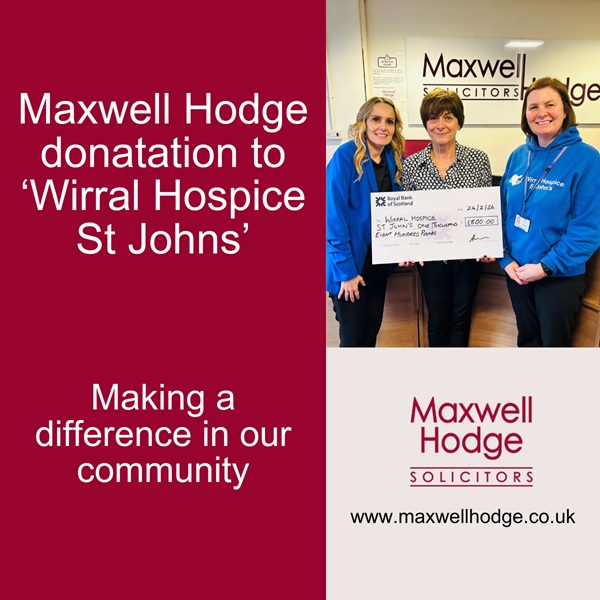
Julia Evans, Giving Manager at Wirral Hospice St John’s recently visited our West Kirby branch, where Candice Jones and Lisa Cockburn proudly presented a cheque for £1,800 on behalf of the Directors at Maxwell Hodge.

Buying a home is one of the most significant financial decisions a person can make. If you own a leasehold house, you may not realise that you have the opportunity to purchase the freehold, or you may wonder whether it would be worthwhile.

The theme for this Children’s Mental Health Week is ‘This is My Place’ aimed at helping children and young people feel that they belong.

In a world where the leap from education to the professional landscape can seem daunting, initiatives like the ‘Next Steps Programme’ organised by Elevate EBP, and recently held at Saints Peter and Paul Catholic High School, offer an invaluable bridge.

Medical negligence cases involve both healthcare and law, often involving complex clinical details that are difficult for non-medical professionals to interpret. Determining whether a healthcare provider breached their duty of care and whether that breach caused harm requires a careful, evidence-based view. This is where medical negligence experts become vital. Their role is not only to interpret complex medical facts but also to provide an opinion on whether the actions of a treating clinician or healthcare provider meet the appropriate standard of care. Their input can be the difference between a successful claim and an unsuccessful one.
What is a Medical Negligence Expert?
A medical negligence expert is a healthcare professional who typically has extensive experience and expertise in their field of medicine and provides an opinion on whether the care and treatment given was negligent and whether any injury has been caused due to the negligent treatment. Unlike treating healthcare professionals, who are directly involved in a patient’s care, these experts are independent and do not know the treating clinicians, ensuring that the advice that an expert provides is impartial and free of any bias.
They may be asked to assess whether a critical diagnosis was missed, if an avoidable error was made, or whether consent procedures were properly followed. These professionals may be engaged by either side in a case – Claimant or Defendant – and must adhere to strict duties of impartiality, offering opinions based solely on the evidence.
Why are experts crucial in these cases?
Medical complexity
Medical negligence cases often involve highly specialised knowledge. The court, who typically lack medical training, rely on expert testimony to understand whether actions taken, and treatment provided were reasonable under the circumstances.
Establishing breach of duty
One of the core legal tests in negligence is whether the care provided fell below an acceptable standard. An expert who is instructed to prepare a breach of duty medical report will examine clinical records, guidelines, and other evidence in order to determine whether the healthcare provider did not adhere to the relevant standard of care.
Proving causation
It is important to determine, where a breach of duty is established, that the claimant has been caused to suffer harm as a result. This requires an expert opinion on the issues in question for example, was the delay in treatment a direct cause of deterioration? Would the outcome have changed if proper care had been given? Expert evidence is essential in answering these questions.
Defining the Standard of Care
What is considered ‘reasonable’ care can vary between medical specialities. Medical experts provide assistance in defining whether a healthcare providers actions or omissions have fallen below the standard expected of a competent practitioner in that field, helping the court to apply the correct standard by providing objective, unbiased opinions on matters within their expertise. This is why when obtaining an opinion from an expert on breach of duty, it is important to instruct an expert of the same specialism as the potential Defendant.
Legal Requirements and Guidelines
Expert evidence is most often a formal requirement in medical negligence litigation, with the expert’s main duty being to the court, not to the party instructing them.
Medical negligence experts are vital in helping to bridge the gap between clinical practice and legal standards. Their role is central to understanding if harm has been suffered due to substandard care and is vital to assessing the prospects of succeeding in a medical negligence claim. As healthcare becomes more complex, the demand for competent, impartial, and clear medical experts will continue to grow.
In September, Pamela celebrated 10 years’ service at Maxwell Hodge.
Pamela joined us in 2015 as a Paralegal in our Civil Litigation Team and since then, she has progressed to Office Manager at Aintree and leads our Personal Injury Team, in her role as Team Leader.
In addition to her leadership roles, Pamela has a varied caseload, representing clients in RTAs, CICA claims, and accidents at work, as well as slips, trips or falls. She also acts in landlord and tenant claims, debt recovery and disputes such as professional negligence or disputes relating to wills/inheritance.
She approaches all her roles with diligence, fairness, and kindness, making her popular with and respected by clients and colleagues alike.
Everyone at Maxwell Hodge would like to congratulate Pamela on her anniversary and we look forward to celebrating many more years with her.

This month, Kristina celebrated 20 years’ service at Maxwell Hodge.