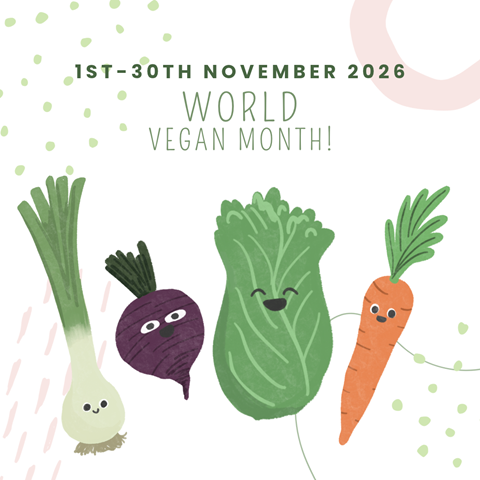
Pat and Chloe French have maintained a vegan lifestyle for several years. In this article they have prepared they discuss the importance of being mindful and informed in many aspects of our lives, which includes the food that we consume. They say that introducing more plant-based meals into your diet is beneficial not only for the animals, but for our environment and your health too!
The animals
Let’s start with the obvious – reducing your consumption of animal products means less animals lives lost. Marketing on products such as ‘Happy Eggs’ can make us feel like the animals are loved, cared for and killed humanely. This can be reassuring, especially as a lot of Brits would describe themselves as “animal lovers”. However, it is just that – marketing.
We recognise how smart and loving animals are, but this often just pertains to our pets, but remember this applies to chickens, cows, and pigs etc also. In fact, pigs are one of the most intelligent animals on the planet!
Going into detail on how animals make it to our plates can be distressing, so instead here are some documentaries to watch on your own time.
- Land of Hope and Glory 2017 – Shows conditions of animals in farms across the UK.
- Seaspiracy 2021 – Explores the collapse of whale, shark, dolphin and sea turtle populations, the environmental impact of fishing and the human impact on marine life.
- Dominion 2018 – Exposes the realities of animal agriculture, and other ways animals are used (clothing, entertainment and research).
- Cowspiracy 2014 – Discusses how factory farming is decimating the planet’s natural resources.
- What the health 2017– Follow-up film to Cowspiracy, including interviews with physicians and researchers, exploring the link between chronic illnesses and the consumption of animal products.
The environment
Reducing the demand for animal agriculture, and agriculture used to produce animal feed, significantly lowers greenhouse gas emissions, deforestation, water usage and pollution.
- Greenhouse gas emissions – Methane produced by livestock digestion is potent, and traps significantly more heat in the atmosphere than carbon dioxide, accelerating climate change.
- Deforestation – Deforestation occurs because of the demand for land to raise livestock and land for crops that produce their feed.
- Water Usage – Global demand for clean water is projected to exceed supply by 40% by 2030. Swapping beef for a plant-based alternative reduces the amount of water usage, as producing just 1kg of beef uses on average 15,000 litres of water – compared to approximately 2,500 litres for 1kg of soybeans or tofu.
- Pollution – Manure from livestock contains high levels of nitrogen and phosphorus, contaminating both water and air.
Your health
Following the China-Cornell-Oxford Project, T. Colin Campbell wrote the book “The China Study” which examines the link between the overconsumption of animal products and chronic illnesses. The conclusion was that those who adopt a predominantly whole-food, plant-based diet will escape, reduce, or reverse the development of numerous diseases.
Processed meats, such as bacon, ham, and sausages, are classified as a known carcinogen, meaning there is sufficient evidence that the consumption of these can cause cancer. Red meat, including beef, pork, lamb, and goat, is classified as a probable carcinogen, based on limited but positive evidence linking it to colorectal cancer and mechanistic studies showing potential DNA damage (Source: World Health Organisation).
Easy Swaps
Going vegan overnight can be daunting for a lot of people – but it doesn’t have to be all or nothing. You can start by making a few simple swaps, for example:
- Cow’s milk – Soy, almond, oat, coconut, or rice milk
- Bacon – Vegan bacon (alternatives made from soy, pea protein, tofu, tempeh, or seitan etc. Our favourite is the Richmond Meat Free Streaky Bacon Rashers!)
- Dairy cheese – Vegan cheese (alternatives made from cashew, coconut oil or tofu etc.)
- Beef mince – Soy mince, pea protein, tofu, lentils, or mushrooms.
- Chocolate – Dairy free alternatives (including your favourite brands such as Galaxy, Tony’s Chocoloney and Lindt).
A lot of your daily foods are already vegan, for example fruit, vegetables, rice, pasta, bread, beans, and legumes. So, you can still enjoy your favourite foods with some easy swaps!
Of course, you may not like some brands and prefer others so there’s a bit of trial and error whilst you are finding what products are your favourite. It is worth remembering, don’t give up on vegan cheese because you don’t like the first one you try – likewise for other replacements.